
There Is No Alternative
How the West adopted Soviet thinking about China, and why Europe needs the dogma most

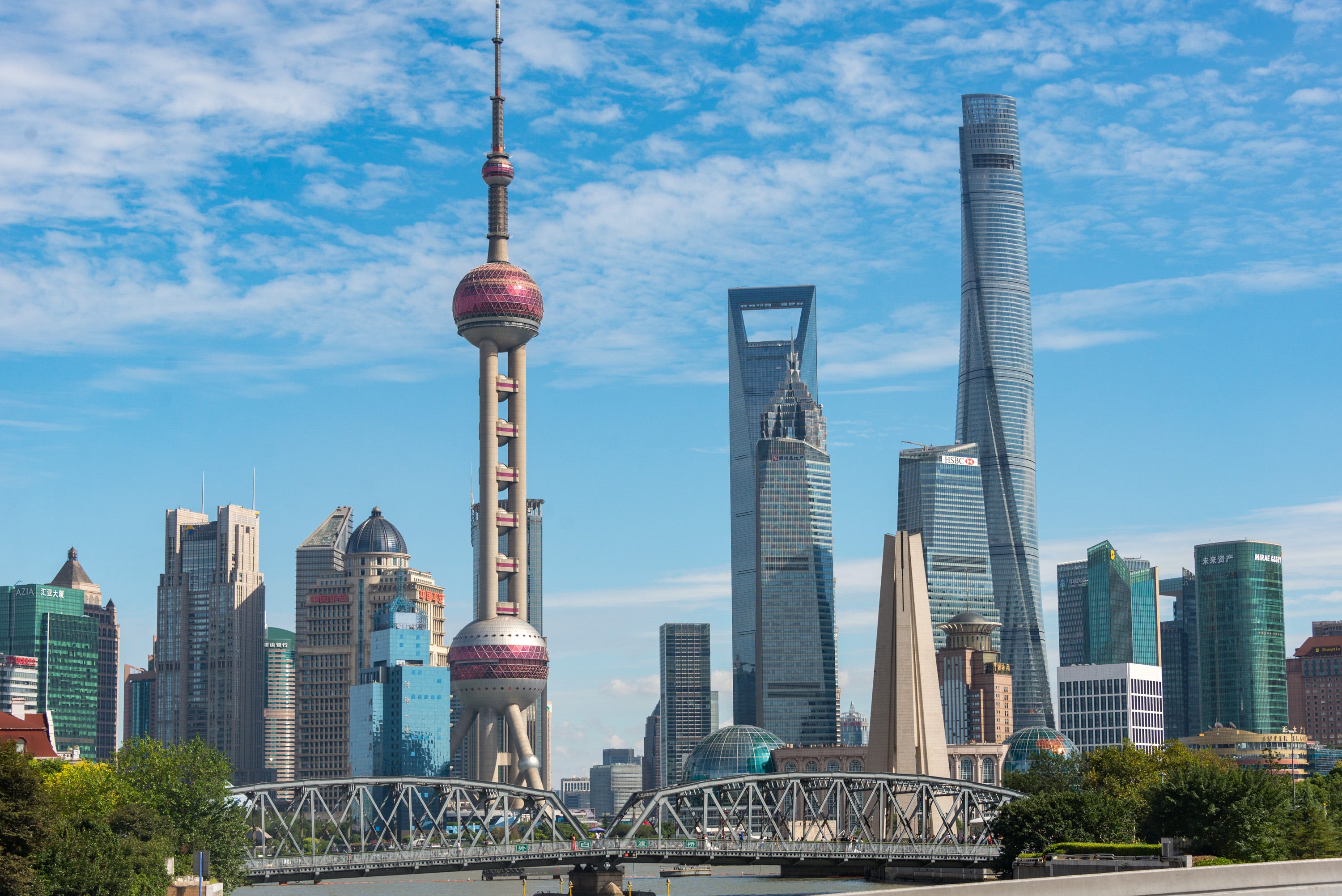
China’s image in the West is tightly controlled and manipulated. That sentence sounds backwards, since we are used to saying it about China’s control of information, but it describes the Western information space accurately. Chinese prosperity, especially urban prosperity, has reached Western levels, and on several counts that ordinary people care about, public safety, public transport, the speed of getting projects built, it has passed them. This is not a secret in any technical sense, yet it is absent from the official picture, and the mechanisms keeping it absent are worth examining, because they tell us more about the West, and especially about Europe, than about China.
Why the picture is managed
The propaganda logic has gone through two stages, and the difference between them matters.
Stage one was the Cold War claim: communism cannot work. This was a falsifiable, empirical statement, and in the Soviet case it was vindicated by the empty shelves themselves; the West won that argument on the evidence.
Stage two is different in kind. Everyone has by now quietly conceded that China is not meaningfully communist. A country with more billionaires than America, brutal market competition in every sector, and a property crash is many things, but it is not a planned economy. So the claim has mutated: not “communism cannot work” but “no alternative to our arrangement can work.” This is Thatcher’s TINA, There Is No Alternative, promoted from political slogan to civilizational axiom. And here is the problem: it is no longer an empirical claim but a dogma, and while claims get revised when the evidence goes against them, dogmas get defended. The defense requires exactly the apparatus we observe: the dystopia framing, the social credit mythology, the reflexive “yes, but at what cost” appended to every Chinese achievement, the annual prediction of collapse that has been running continuously since 2001 and is always one year away.
There is a historical irony here that deserves to be spelled out. Soviet ideologists faced a genuine problem: their doctrine predicted capitalist immiseration, yet any Soviet citizen who caught a glimpse of the West could see supermarkets, cars, and apartments. The doctrine could not be revised, so the evidence had to be explained away, and a whole scholastic vocabulary existed for the purpose. Western workers who seemed content suffered from “false consciousness”: they were too manipulated to know they were exploited. Western prosperity was “late capitalism’s temporary stabilization”: real, perhaps, but doomed, a last flowering before the inevitable crisis. Whatever a visitor reported seeing was dismissed as the surface, beneath which theory knew better. The West laughed at this, correctly, since it was the behavior of people protecting a conclusion from observation.
Now listen to the Western commentary on China and note the identical grammar. Chinese prosperity is “debt-fueled”: real, perhaps, but doomed, a last flowering before the inevitable crisis, which is “late capitalism’s temporary stabilization” translated word for word. Chinese citizens who seem content are victims of surveillance and censorship: too manipulated to know they are oppressed, which is “false consciousness” with a technological update. Whatever a visitor reports seeing is dismissed as the showcase, the Potemkin surface, beneath which theory knows better. Every rhetorical move has its exact Soviet predecessor, down to the standing prediction of collapse that is never dated and never abandoned. The side that won the systems contest on evidence has, one generation later, inherited the loser’s thinking habits: it now protects its conclusion from observation, because the conclusion has become the thing it cannot afford to lose.
China’s answer to this managed picture is itself surprising, and the surprise is diagnostic. Beijing has not responded with counter-messaging but by abolishing visas: around fifty countries, nearly all of the EU included, thirty days, no application, come and look. The roles have inverted, with the self-described open society maintaining a tightly managed narrative about its rival while the self-described closed society lets anyone walk in with a camera, and the millions of “China shocked me” videos now circulating are the result. This is the one move a narrative-controlling adversary cannot answer in kind, because the West’s claims about China live in headlines, not on territory anyone can inspect. Beijing is betting its physical reality against the West’s description of that reality, and such a bet is only rational for the side that believes inspection favors it, which means the bet itself is information.
Why Europe needs the dogma most
Europe needs this dogma more than America does. America still leads in things: frontier AI, capital markets, military power. An American can dismiss China’s trains and still point at SpaceX; a European cannot. If there is an alternative arrangement that builds infrastructure, industries, and technological capacity at speed, then Europe’s stagnation is not fate, it is a choice, and someone chose it. The China narrative functions in Europe as anesthetic: a population convinced that China is a Potemkin prison camp will not ask why it cannot have China’s trains, industrial policy, or build speed. The propaganda does not merely misinform, it protects a governing class from the comparison that would indict it.
Which brings us to the comparison that fits Europe best, and it is not China. It is the late Soviet Union, roughly from the mid-1970s to the end.
The Soviet mirror
The parallel is not rhetorical decoration. Take the elements one by one.
Around 1975 the Soviet Union stood at its apparent peak of external power: Helsinki, détente, strategic parity. Internally it was already exhausted, and its leadership knew it. The EU’s position after 2008, and visibly after 2020, is the same configuration: maximum institutional reach, treaties, enlargement, regulatory empire, on top of an economy that had stopped growing relative to every competitor.
The optional war. Afghanistan in 1979 was chosen as a demonstration of resolve and became a demonstration of weakness, draining treasure and legitimacy for a decade with no theory of victory. Ukraine occupies the same structural position for the EU: Europe carries the largest economic burden of the war while having the least say in how it ends, Washington and Moscow negotiate, Brussels issues statements, and there is no European theory of victory or of settlement, because Europe has no army with which to have one.
The hydrocarbon trap, inverted. The USSR was addicted to selling oil and gas, and collapsed when the price fell. The EU is addicted to buying them, and is being bled as the price rose: cheap Russian pipeline gas swapped for American LNG at multiples of the cost, after Germany had switched off its nuclear plants first. Opposite positions in the same trap, rent dependence instead of production, with the highest industrial electricity prices in the developed world as the result.
The technological gap at the decisive moment. Soviet planners saw the computer revolution coming, wrote reports about it, and could not respond, because responding required freedoms the system could not grant. Europe watched the internet platform era pass to America, and is now watching the AI era pass to America and China, while producing regulations for technologies it does not build. The internet meme puts it more economically than any analyst: America builds rockets that land themselves and get caught by the launch tower, Europe builds bottle caps that stay attached to the bottle. The tethered cap is a fair symbol, because it shows what a declining administration selects for: not what is important, but what is still within its power to execute, which it then announces as achievement. Not a single company founded in Europe in the last thirty years matters at global scale, with the honorable exception of ASML, which only proves the point: Europe’s crown jewels are either inherited, Airbus, luxury conglomerates, tourism trading on cathedrals built centuries ago, or irreplaceable niches from an earlier era. Aviation, expensive fashion, and museums are a fine portfolio for a retired power.
The gerontocracy. Brezhnev’s Politburo did not believe its own speeches for at least a decade before the end, and everyone below them could tell. The Brussels class produces the same wooden language, strategic autonomy, de-risking, rules-based order, spoken by people who visibly do not expect it to change anything. Trump has merely made explicit what the vocabulary was hiding: the EU is not a pole but a protectorate, dependent for its defense, its energy, and its geopolitical decisions on a patron that now openly presents the bill.
Why do the elites permit all this? The tempting answer, that the current generation of politicians is exceptionally mediocre, explains nothing; every era says that. The real answer is the selection mechanism. National politics has been emptied of its largest decisions, money to Frankfurt, trade to Brussels, security to Washington, so domestic careers select for coalition management and media survival, not statecraft. And the Brussels track selects for the opposite of decisiveness: advancement runs through consensus among twenty-seven vetoes, which trains people to treat the absence of conflict as achievement. A machine that promotes the unthreatening staffs itself with the unthreatening. The Soviet system had a name for this, negative selection: loyalty promoted, initiative punished, until the moment initiative was needed and the personnel shelves were as empty as the shops. It helps that the decline costs its managers nothing personally. European stagnation is experienced by industries, regions, and the young; it is not experienced in the Berlaymont, where careers end in board seats regardless of results.
And the final Soviet lesson, the one that matters most: the elites stopped believing first, and the population followed only years later. The perestroika-era genre of the honest official diagnosis that changes nothing, the report that names every failure and produces no reform, was the surest sign that the system had entered its terminal configuration. Europe already has its version, the Draghi report: several hundred pages of accurate diagnosis, commissioned by the system itself, endorsed by everyone, acted on by no one.
None of this means the EU will dissolve on a schedule. Europeans, unlike Soviet citizens, can vote, travel, and read what they like. But this difference is smaller than it appears, because the West never needed Soviet methods. Its ideological apparatus is incomparably more sophisticated than anything the Soviet party-state operated: not censorship but curation, not one official truth but a managed spectrum of permitted disagreement, while the inconvenient is not banned, merely buried by the attention economy. A system that manufactures consent does not have to forbid dissent, which is precisely why it can afford open borders and free elections; the Soviet Union was repressive because its propaganda was crude, and the West is tolerant because its propaganda is good. That sophistication, however, was built for conditions that no longer hold, because it works only as long as the audience cannot check the claims for itself. For most subjects, monetary policy, intelligence assessments, distant wars, the audience still cannot, and China sat in that category for decades. Since the visa opening it no longer does: checking costs a plane ticket, millions of people are doing it, and this is why the China story is where the machine is visibly breaking first. For everything else, the machine still works, which is why the outcome is slow leakage rather than collapse: stagnation competently administered, national defections, managed rebellions, the shell outlasting the belief. But the belief is the thing to watch, not the shell. The Soviet Union looked permanent in 1985, and what had already ended by then was the conviction, inside the system, that there was no alternative.